Sustainability. A big word, and a responsibility we take seriously.
Let us set out what we actually contribute.
Felix trained at Hotel Waldhaus in Sils-Maria. Animals arrived whole from farmers nearby and were boned in the kitchen. Herbs were picked in the woods and were on the plate the same day. Nothing was thrown away, because there was no reason to. Those are the rules we still work by.
Is that sustainability?
The buying
We buy only what we have sold
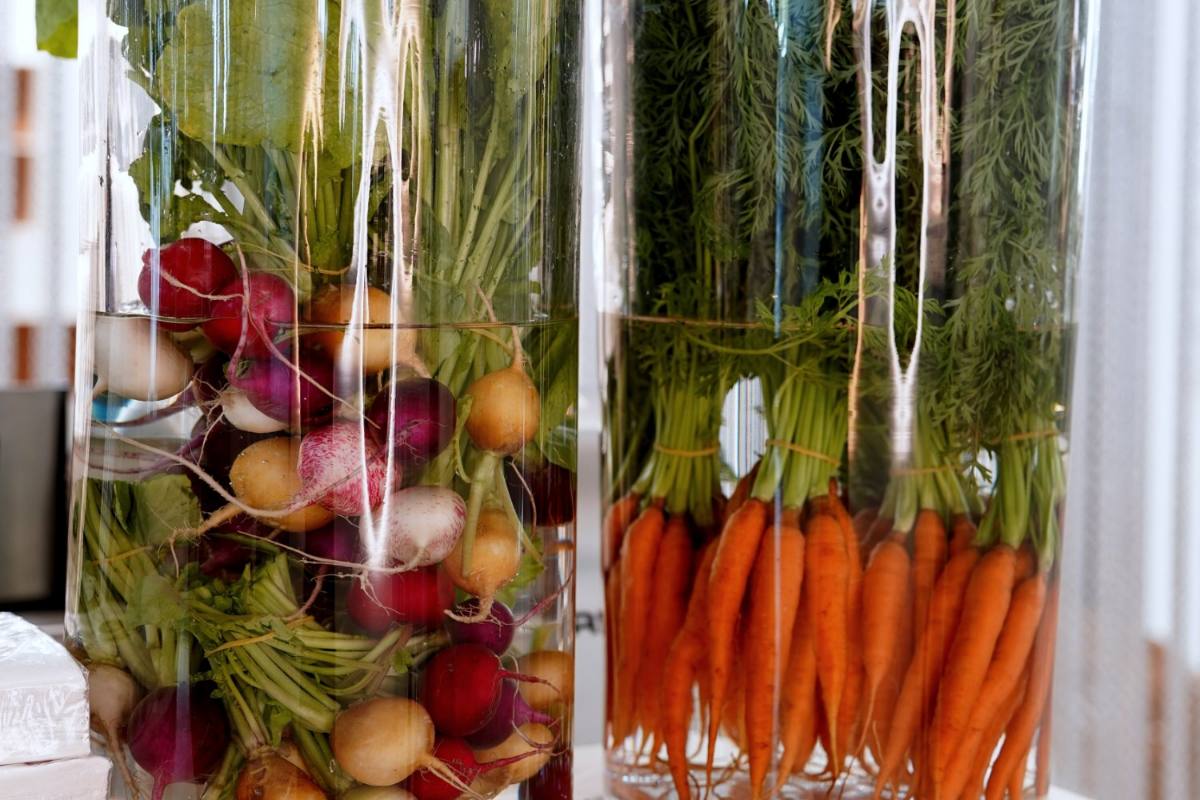
Most food waste in catering happens at the point of purchase. Because our kitchen is inside the Zürcher Engrosmarkt, we buy for the event in front of us, in the quantity it needs. No interim storage, no long transport.
We cook with produce at its peak
A shop needs fruit that survives three days of logistics. A kitchen cooking tonight needs fruit that is perfect tonight. Those are not the same fruit.
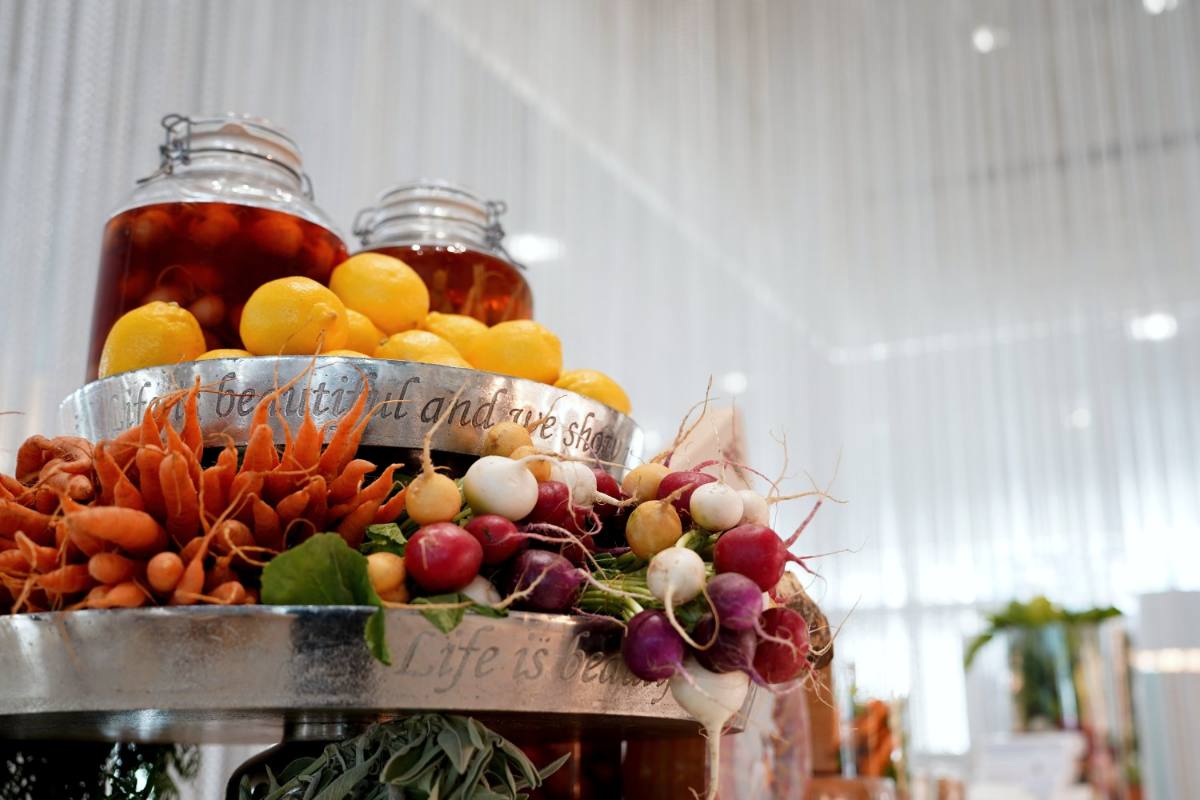
At the market we get the second kind: ripe, chosen that morning, straight into the kitchen. Produce that would be too ripe for retail is exactly right for us.
Three things go to your guests after the event
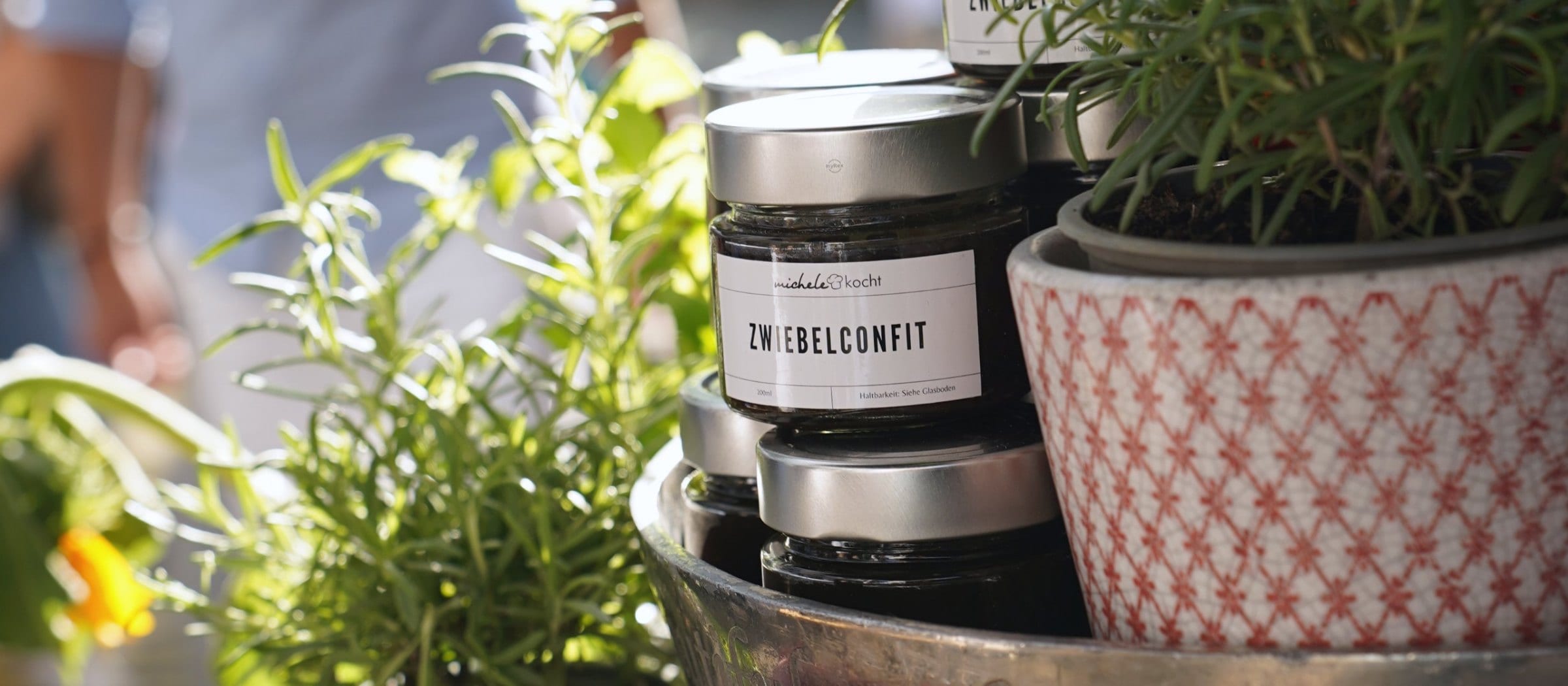
Soup. Vegetable trimmings, meat, charcuterie and bread are collected during the event. The next day we cook them down into a vegetable soup, fill it into jars and send it to your guests. The recipe comes with it.
Jam. Any fruit left over is preserved. Also in a jar, also with the recipe.
Vinegar. Opened bottles and returned glasses, wine, gin, apple juice, water and iced tea, are collected in a barrel during the evening itself. From that we make a vinegar, which your guests receive in small glass bottles.
One single event for Ergon Informatik AG has produced 100 jars this way. Guests take home something made out of their own evening, and Ergon put it into their sustainability report.
Figures for your sustainability report
Since the Swiss climate reporting ordinance came into force in 2024, many Swiss companies have to report on their supply chain, and catering falls under Scope 3. Most smaller suppliers cannot say anything useful on this. We can.
On request you receive a breakdown after your event covering:
Sourcing, origin and transport
Swiss origin as a share of goods purchased
approx. 60 percent
Of which from canton Zürich and surroundings
approx. 40 percent
Meat
Swiss origin, evidenced on request
Share of seasonal produce
approx. 90 percent
Distance from market to kitchen
under 100 metres
Average distance from kitchen to venue
30 km
Journeys per event
1 vehicle, 1 trip
Food waste
Goods purchased per guest
0.4 kg
Share disposed of
0.05 kg per guest
Menu
Share of vegetarian and vegan dishes
stated per event
Of 400 grams of produce per guest, an average of 50 grams is thrown away. The rest is eaten or cooked down.
We do not publish CO2 figures, because a defensible calculation needs a methodology we do not maintain ourselves. What you get from us are the quantities, distances and shares. Your own system does the conversion.
If you send us a supplier questionnaire, we will complete it.
How do you reduce food waste?
We buy at the Zürcher Engrosmarkt on the day of the event rather than ordering to stock. Whatever is still there at the end, we process further: vegetables and bread into soup, fruit into jam, drink remnants into vinegar.
What happens to what is left after our event?
Vegetables and bread become soup, fruit becomes jam, drink remnants become vinegar. It all goes to your guests in jars, with the recipe.
What does it mean that your kitchen is inside the market?
We do the buying ourselves every morning and get first pick. And we get produce at its peak, which would be too ripe for retail because it would not survive the transport. Between buying and cooking there are metres, not kilometres.
Do you work with organic produce?
We supply organic on request, as a rule for around half of what we buy. For vegetables and fruit we buy organic where it exists, and otherwise from producers whose work we know.
Where do the meat, fish and vegetables come from?
From suppliers we have known for years, according to what the client wants. Knowing where something comes from matters more to us than a label.
Can you run a fully vegetarian or vegan event?
Yes. Felix helped develop two vegan cooking concepts. A plant-based menu here is a menu in its own right.
Can we get figures for our sustainability reporting?
Yes. On request you receive a breakdown after the event covering origin, transport distances, food waste, share of plant-based dishes and share of reusables. We do not state CO2 figures, because that requires a methodology we do not maintain. We supply the quantities and distances so your own system can do the calculation.
Do you complete supplier questionnaires?
Yes. Send us your questionnaire, whether EcoVadis, IntegrityNext or your own form, and we will fill it in.
Is sustainable catering more expensive?
No. Buying on the day of the event and calculating tightly means less gets thrown away. It balances out.